Online Casino Game Shows in the UK: How They Work
 Available in GB
Each format sets its own betting window, available outcomes and settlement rules within a live, television-style presentation.
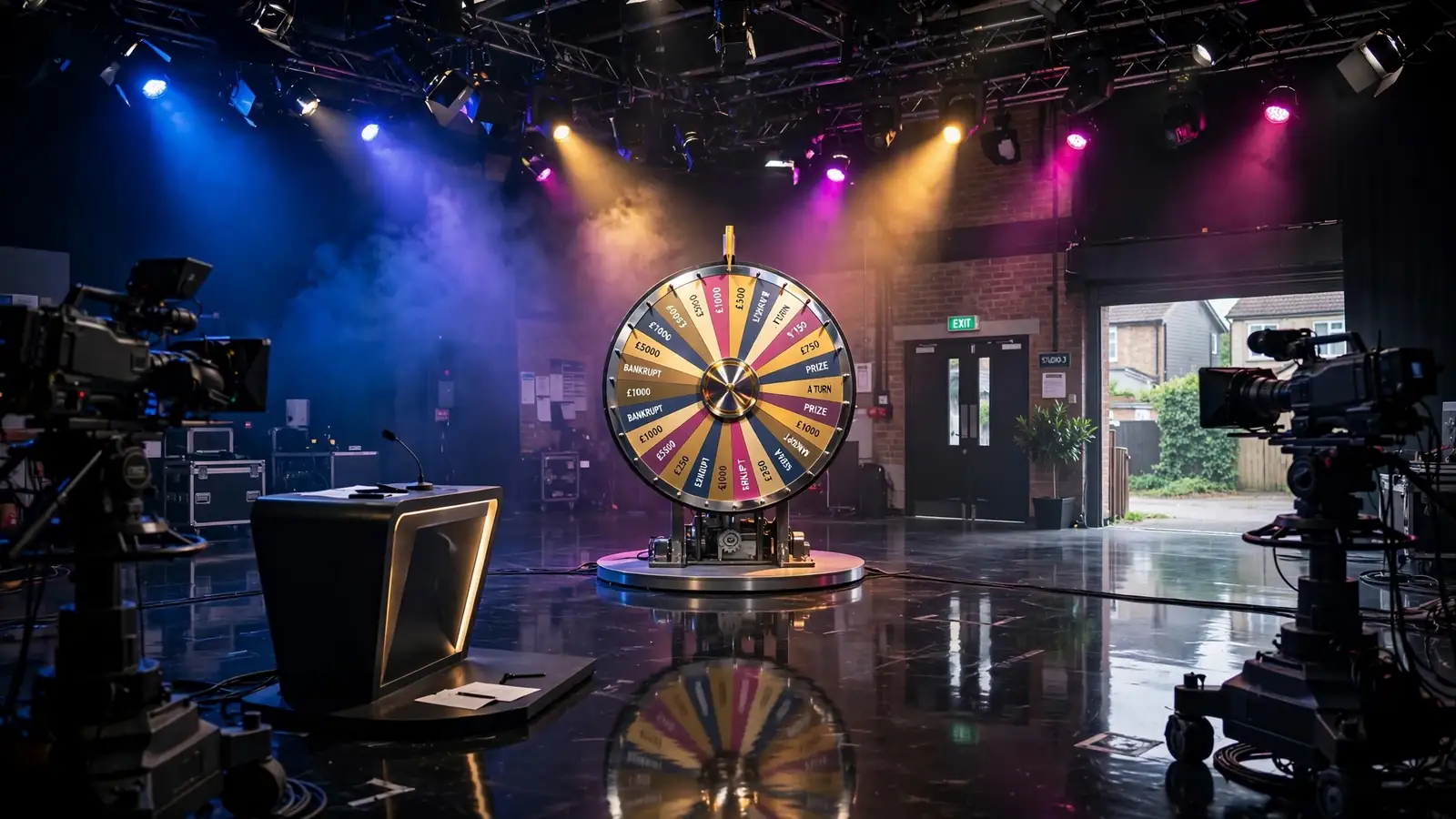
How Online Casino Game Shows Work
An online casino game show combines a game of chance with a live, television-style presentation. You place a wager on an available outcome, watch a result unfold on screen, and receive a payout if your selection matches the result under the game’s rules. The presentation may make the experience feel different from a conventional casino game, but the essential sequence is still wager, outcome and settlement.
The term covers a format rather than one fixed set of rules. Different shows can use different ways to generate results, offer different choices and calculate payouts differently. You therefore cannot infer how a particular game works simply from its appearance or from the phrase “game show”. The rules for that game determine what you can select, when a wager is accepted, how the result is established and what happens afterwards.
The basic sequence
A round generally has a few distinct stages. First, the game displays the choices available for that round. You select one or more outcomes and enter your stake while wagering is open. Once betting closes, the game produces a result. The game then applies its rules to your selection and stake, showing whether the wager won and what amount, if any, is credited.
These stages matter because a selection is not the same thing as a result. A screen may show multiple possible outcomes, but only the outcome produced for that round determines whether a particular wager wins. Likewise, a displayed payout value describes what a winning selection may return under the rules; it does not mean that the selection is likely to win.
UK Online Casinos With No Limits: What It Means
The interface usually separates the decision period from the result period. While betting is open, you can inspect the available options and make a selection. When betting closes, the current wager is fixed for that round. The game then proceeds to the result and settlement. If you do not place a wager before the cut-off, there may be no bet to settle for that round. The exact timing and any options for changing or cancelling a selection depend on the individual game’s rules.
A round can also include more than one stage of resolution. For instance, the initial result might lead to a further event that changes the final outcome or payout. In that case, it is important to distinguish the first event from the final settlement: the game rules specify which stage decides a wager and whether a later stage can alter its value.
What makes the format different
In a conventional digital casino game, the interface is often organised around a repeatable player action: choose a stake, start a game cycle, and view the result. A slot, for example, presents its own symbols and game rules in a compact interface. A table game presents a set of decisions defined by that game’s rules. The screen is primarily a control surface for that particular game.
A casino game show adds a shared, event-like structure. Rather than presenting only a button-driven game cycle, it can show a round developing as a sequence of visible events. The player’s task is usually to make a prediction or select an outcome before the result is revealed. The on-screen presentation supplies context for the event, while the rules determine which selections are available and how they are settled.
That difference is about presentation and interaction, not a change in the underlying nature of gambling. A game show can make a result easier to follow because the sequence is visible, but visibility does not let you predict the outcome. Nor does a dramatic reveal change the mathematical terms of a wager. The relevant information remains the rules, the available selections and the payout calculation.
Amatic Online Casinos in the UK: How They Work
The distinction is also not simply “live” versus “not live”. A game can be presented as a live event, but the player still interacts through software: the interface records selections, accepts wagers during the permitted period and displays the result. The live presentation and the wagering system are related parts of the experience, but they serve different functions. The presentation shows what is happening; the software applies the game’s rules to the wager.
Understanding a wager
Before placing a bet, identify what your selection means. A label can refer to a single result, a group of results or a particular event within a round. Those are not interchangeable. A wager on a broad category may cover several possible outcomes, while a wager on a specific result may win only if that precise result occurs. The rules should define the meaning of each option.
Next, check how the game describes the stake and return. A displayed return may include the original stake, or it may describe winnings separately; the game’s wording determines which interpretation is correct. This distinction affects how you understand the amount shown after a win. If the explanation is unclear, do not assume that a number on screen represents profit rather than total payout.
The game may allow more than one selection in a round, but that does not necessarily mean those selections combine into one bet. They might be treated as separate wagers, or the interface might apply a specific combination rule. You need the game’s own explanation to know how the total stake and any return are calculated. A list of selected options alone may not show how the game will settle them.
Also note whether a selection remains in place for later rounds or applies only to the current one. Some interfaces require you to make a new choice each time; others may provide a way to repeat a previous selection. Repeating a choice does not change the probability of a result, and it should not be confused with an automatic prediction. The rules and controls determine what is actually being wagered.
Amatic Games at UK Online Casinos: What to Know
Results, chance and presentation
A visible result can make the mechanism easier to understand, but it does not by itself explain how the result is generated. A game’s rules should tell you what event determines the outcome and how that event maps to the betting options. Depending on the format, the result may be presented through a sequence of events rather than as a single instant. The sequence can be entertaining to watch, but the final outcome is what matters for settlement.
A display may use animations, sound or other visual cues to make the round legible. Those cues are part of the presentation; they should not be treated as additional evidence about what will happen. A result that appears close to a selected outcome is not necessarily a partial win. Only the stated settlement rules decide whether a wager wins, loses or receives another treatment.
This is one reason to separate the game’s excitement from its mechanics. A suspenseful pause can lengthen the perceived build-up without changing the wager. A rapid sequence can make events harder to follow without changing the rules either. In both cases, the useful questions are the same: what did you select, what event occurred, and how do the rules connect that event to the payout?
Pacing and player decisions
Game shows often divide play into rounds, with a new opportunity to wager as one round ends and another begins. This creates regular decision points. You can use the pause between rounds to review the options and your stake rather than treating the game as a continuous stream of action. The pace of the presentation does not require you to participate in every round.
Do
- Use pauses between rounds to review options and stakes
- Understand the controls before placing a bet
- Distinguish the game’s pace from its actual risk
Don’t
- Treat the game as a continuous stream of action
- Assume a visual selection is a placed wager without confirmation
- Assume a slow reveal makes a win more likely
The time available for a decision is part of the interface. Once wagering closes, you may be unable to change a selection for that round. That is why it helps to understand the controls before you bet: where the stake is entered, how a selection is confirmed, and what indicates that the wager has been accepted. A visual selection that has not been confirmed may not be a placed wager.
It is also useful to distinguish a game’s pace from its risk. A fast sequence does not necessarily imply a higher chance of losing, and a slow reveal does not make a win more likely. Risk depends on the possible outcomes and the rules for each wager. The presentation affects how the round feels; it does not substitute for the game’s probability and payout structure.
What a live format does not tell you
The words “live game show” do not establish that every game uses the same equipment, rules or result-generation method. They do not tell you how many betting choices are available, whether choices can be combined, or how a bonus event works. Those details belong to the individual game. Treat the category name as a description of the broad format, not as a complete explanation.
Nor does a live presentation guarantee that the game offers more control than a conventional casino game. In most chance-based play, your decision is limited to the choices the rules permit, such as which outcome to back and how much to stake. You do not control the result itself. The game may present a decision in an interactive way, but interaction should not be mistaken for influence over chance.
Amatic Online Casinos in the UK: Games and Rules
A useful way to assess any online casino game show is to follow one round without wagering, if the game allows it. Observe when choices appear, when betting closes, how the result is shown and where the settlement is displayed. Then read the rules and compare them with what the interface does. This reveals whether the sequence is clear and whether you understand the relationship between a selection and a result before money is involved.
The regulatory setting
In Great Britain, remote gambling offered to consumers is regulated by the UK Gambling Commission, including when key equipment used to provide the service is located elsewhere. The Commission is the sole regulator for commercial gambling in Great Britain. It issues operating licences to businesses and personal licences to individuals working in regulated roles.
That regulatory framework concerns the businesses and people involved in providing gambling; it does not change how a game’s round is calculated. For you, the distinction is practical: the game rules explain the wager and result, while the operator’s regulatory status concerns whether it is authorised to provide remote gambling to consumers in Great Britain. A live presentation is a style of game, not a separate explanation of either point.
Once you understand the round structure, the difference from a conventional casino game becomes clearer. A game show adds a visible, staged sequence around a wager. The underlying decision remains bounded by the available selections, the closing of betting and the rules used to settle the result.
Summary of Game Shows
- A game show adds a visible, staged sequence around a standard wager
- Results are determined by specific game rules, regardless of the dramatic presentation
- The underlying decision is bounded by available selections and the closing of betting
- Regulatory status concerns the operator’s authorisation, not the game’s calculation
Recommended online casinos
- NightWinBonus: £900 + 400 free spins · Payout speed: 1-3 business days
- ChanzeBonus: Slots Welcome Bonus #1 200% up to €500 · Payout speed: 1-3 business days
- BritsinoBonus: Welcome Package – Get your £2,200 + 2,000 FS · Payout speed: 1-3 business days
- ZombillionBonus: Welcome Pack 250% up to £4000 + 200 FS · Payout speed: 1-3 business days
- DieselwinBonus: Welcome Pack 250% up to £4000 + 200 FS · Payout speed: 1-3 business days
- EvoSpinBonus: 125% up to €2500 + 125 Free Spins · Payout speed: 1-3 business days
- x3betBonus: Welcome Pack 100% Up to £1.000 + 200 Free Spins · Payout speed: 1-3 business days
- JetsetspinsBonus: 200% Bonus + 100 Free Spins + Free Royal Wheel · Payout speed: 1-3 business days
- BeOnBetBonus: 100% up to €500 + 100 FS · Payout speed: 1-3 business days
- SlotoSportBonus: 500% up to £ 10 200+ 777 FS · Payout speed: 1-3 business days
Finding Live Game Shows at Online Casinos
A casino’s general description is not enough to establish that it offers live game shows. A site may use broad labels such as “live casino” or “casino games” without making clear which products are available to you. Check the games actually listed in the operator’s lobby, then confirm that any title you are considering is accessible under the account and location conditions that apply to you.
Availability is a separate question from how a show works. You do not need to evaluate its rules, presenter or studio to establish whether the operator carries it. The first task is to identify the product in the casino’s current catalogue; the next is to establish whether the operator is authorised to offer remote gambling to customers in Great Britain.
Start with the operator’s own catalogue
Open the casino section of the operator’s site or app and look for its live or live casino area. If the lobby has categories, use them as a starting point rather than treating a category name as proof. A “live” label may cover products other than game shows, while a show may be placed in a different category or appear only in the full game list.
If there is a search field, search for the title you have in mind. If you do not have a title, browse the available categories and read the descriptions attached to the listed games. A result in a casino’s search tool shows that the site has indexed the product, but it does not by itself establish that you can open it. The result might be unavailable to your account, temporarily inaccessible, or shown as part of a broader catalogue.
Amatic Online Casinos UK: How Game Access Works
Check the page that opens when you select a result. Look for the game’s full title, its current availability and any access conditions displayed by the operator. If the page leads to an error, a blank window or a message that the product is unavailable, do not treat the lobby listing as confirmation that you can play it. The listing and the playable product are different pieces of evidence.
Some operators provide a catalogue outside the signed-in lobby. This can help you understand what the site says it carries, but it may not reflect the games available to every customer. If a title appears in a public list but cannot be found or opened in your account, ask the operator whether it is currently offered to your account. A clear answer from the operator is more useful than assuming that a catalogue page applies universally.
Read labels as clues, not guarantees
Terms such as “live games”, “live casino” and “game shows” are not interchangeable evidence. A section called “live casino” may contain several kinds of products, and the label alone does not tell you that a game-show format is included. Conversely, a particular show may be listed by its own title without being grouped under an obvious game-show heading.
To avoid relying on an ambiguous label, look for a title-level description. It should identify the product clearly enough for you to distinguish it from other live offerings. If the operator’s wording remains unclear, contact customer support and ask a narrow question: does the casino currently offer live game shows to customers in Great Britain, and where can you find them in the lobby?
Affiliate articles and promotional banners can be out of date or refer to different markets; use them as leads, but rely on the operator’s current lobby and support team for confirmation.
Ask about the live catalogue rather than asking whether the casino has a “live casino” in general. The broader question can receive a technically accurate but unhelpful answer if the operator offers live products that are not game shows. If you are checking a particular title, include its exact name and ask whether it is currently available to your account. Keep the reply or note its date, because game catalogues can change.
An affiliate article, comparison page or promotional banner may help you discover a possible title, but it is not the operator’s live inventory. Such pages can be out of date, describe a different market, or refer to an operator that no longer carries the product. Use them as leads to check, not as confirmation. The operator’s current lobby and a direct answer from its support team are closer to the actual point of access.
Confirm the operator is authorised for Great Britain
The presence of a game in a casino lobby does not establish that the operator holds the required UKGC licence. In Great Britain, a business offering remote gambling to consumers must hold the relevant UKGC licence, regardless of where its key equipment or business is located. Check the operator’s licence details against the Gambling Commission’s Public Register before treating the site as a legal UK option.
This is a check on the operator, not the software supplier or the individual game. The business that accepts your account registration and handles deposits, payouts, bonus terms and customer support is the operator you need to assess. A game’s appearance on a page, or a supplier’s association with it, does not replace the operator’s own licensing status.
Best Betsoft Online Casinos UK: What to Check
Make sure the name on the site matches the business shown in the register. Brand names and company names can differ, so check the licensing information provided by the operator and use it to identify the relevant business. If you cannot determine which company operates the casino, or you cannot match its details to a current UKGC entry, do not assume that a familiar brand name is sufficient.
A foreign licence is not a substitute for a UKGC licence when a site offers remote gambling to people in Great Britain. Offshore casinos operate outside the UKGC regulatory system. Do not use a game listing or an attractive promotion as a reason to overlook the operator’s regulatory status. The availability question only becomes relevant as a UK option once the operator’s authority to serve the market has been established.
Check what access means for your account
A product can be listed without being available in every circumstance. The operator may show a catalogue to visitors that differs from the catalogue presented after sign-in, or the title may be temporarily unavailable. The safest check is to search the logged-in lobby and attempt to open the product without making a deposit. If the operator requires an account to view its full catalogue, read its terms and account information before registering.
Do not make a first deposit merely to find out whether a game exists. Check the lobby, read the relevant help information and ask support first. UKGC-licensed operators must prompt customers to set a financial limit before their first deposit. That prompt is a consumer-protection requirement, but it is not a way to verify whether a particular game is present. A deposit should not serve as a test of the casino’s catalogue.
Licensing Risk
Do not use a game listing or promotion as a reason to overlook an operator’s regulatory status; offshore casinos operate outside the UKGC system.
Access can also depend on the device or software environment you are using. If a listed product does not open, try the operator’s stated support route or ask whether it is compatible with your device. Do not infer from a failed launch that the title has been removed, and do not infer from a visible thumbnail that it will run in your setup. The operator can clarify whether the issue is availability or a technical problem.
If a casino offers a free-play or preview mode, treat it only as evidence that a version of the product can be opened in that mode. It does not establish that the real-money version is available to your account, or that the terms of play are the same. If no preview is offered, do not assume that one exists. Confirm real-money availability directly with the operator before relying on a promotional description.
Separate the game listing from the terms
A game’s presence does not tell you what account conditions apply. Read the operator’s terms for deposits, withdrawals, promotions and account eligibility separately from the game description. If a bonus is involved, check which games count toward its conditions and whether the promotion applies to the product you want to access. Do not assume that every title in the lobby qualifies for every offer.
Amatic Casinos in the UK: Games, Rules and Payments
UKGC rules cap wagering requirements on bonus funds at ten times the bonus amount. That cap does not mean a bonus is automatically suitable, nor does it remove other conditions. The operator’s own terms should state how an offer works, which products are included and what restrictions apply. If those details are difficult to locate, ask the operator before accepting the offer.
The operator remains responsible for its customer-facing obligations. The game supplier does not take bets directly from British players or replace the operator’s role in deposits, payouts, bonus terms and support. If you need help with access, an account restriction or a payment, contact the casino operating your account rather than assuming the game maker can resolve it.
Use a repeatable check
A simple process reduces the chance of mistaking advertising for availability:
- Identify the operator behind the casino brand and confirm its current UKGC licence using the Gambling Commission’s Public Register.
- Open the operator’s current game lobby and look for a game-show category or search for a specific title.
- Read the product page and confirm whether it is currently available to your account, rather than relying on a banner or third-party list.
- If the listing or access status is unclear, ask customer support a precise question and retain the answer.
- Review account and promotion terms separately; a game being present does not establish that a particular offer applies to it.
This process does not rank casinos or establish which one is “best”. That depends on what you want from the service, and it cannot be settled by a category label alone. Compare the operator’s actual catalogue, the clarity of its information and its licensing status. If a title is not present in the current lobby and support cannot confirm access, treat it as unavailable rather than relying on an old listing.
The result should be a specific answer: the operator is licensed to serve Great Britain, the title is shown in its current catalogue, and the operator confirms that you can access it under your account conditions. If one of those points remains uncertain, the casino has not yet been verified as an option for that game.
What to Check in Wheel-Based Live Show Formats
A time-themed name or a wheel on the screen does not tell you how a particular live show works. Before you choose a game, check its rules and on-screen information to establish what you can stake on, how each result is determined, and what a displayed feature actually means. Treat the title as a label, not as a description of the mechanics.
Identify the available bets
Start with the betting panel. It should make clear which outcomes you can select and what each selection represents. A wheel may be visually central, but the game could offer several kinds of wager, and they may not all relate to the same part of the display. Read the explanation for each selection rather than inferring its meaning from a colour, symbol or animation.
Check whether you can place more than one selection in a round and whether those selections are treated separately. The distinction matters: a single combined choice can behave differently from several independent choices if the game’s rules resolve them differently. The rules should explain how a winning selection is identified and how its return is calculated. If the interface shows a potential return, establish whether that figure includes the original stake or is a profit figure; do not assume the display uses one convention or the other.
Amatic Slots at UK Online Casinos: Games and Rules
Look for the full paytable, not only the values shown beside the betting controls. A clear rules panel should connect each selectable outcome to its settlement. If a special symbol or feature appears on the wheel, find out whether it is itself a winning outcome, activates another stage, or changes how a result is paid. Those are different functions, even when the graphics make them look similar.
Read the round sequence
The rules should describe the sequence from the point when betting opens to the point when the result is settled. Check when you may place or change a selection, what closes betting, and what happens if you have not selected anything when the round begins. The game should also explain when a result becomes final and how an unsettled or interrupted round is handled.
This sequence helps you separate presentation from game logic. A countdown, animated transition or dramatic pause may be part of the display, but it does not by itself explain whether betting remains open or whether the result has been decided. Use the game’s stated rules and status indicators to understand what you can still do at each stage. If the rules and interface appear to conflict, avoid making a stake until the point is clear.
For a format that combines a wheel with a further feature, check how you enter that feature and what choices, if any, remain available once it starts. Find out whether the feature uses the original selection, introduces a new decision, or applies a separate settlement rule. Do not treat a feature’s name or animation as evidence that it changes the underlying wager in a particular way.
Wheel Game Check
- Identify what each selectable outcome represents
- Review the full paytable for all symbols and features
- Confirm the sequence from betting opening to result settlement
- Establish how features enter and if they change the original wager
Check what the results display tells you
A result history can help you review completed rounds, but it is not a promise about what will happen next. Check what the history records: it might show only the main result, or it might also record a feature outcome. The rules should make the displayed labels understandable. If an icon or abbreviation is unclear, open the game information rather than guessing.
Also distinguish a record of past results from information about the current round. A recent sequence may be visually prominent, but it does not establish that a particular result is due. Your decision should be based on the rules for the current wager, not on an assumed pattern in previous outcomes.
Confirm the game is the one you intended
Similar themes can appear in different games, and a familiar-sounding title does not establish that two versions share rules. Once a game opens, check its displayed name, rules and paytable. If you arrived through a lobby tile or a promotional image, compare that label with the game information shown inside the game. This is especially useful when you are looking for a particular wheel-based format: the visual theme alone is not enough to confirm that you have opened the intended game.
Before staking, make sure the rules are accessible and readable on your device. On a smaller screen, panels may be collapsed or require scrolling; do not rely on a partial view of the paytable. If the controls, outcome labels or settlement terms remain ambiguous, leave the game rather than filling in the gaps from its appearance. You should be able to explain what your selection means and how it is settled before you place it.
Live Game Shows: The Role of the Host and Live Studio
In a live casino game show, the host and studio are part of the viewing experience, but they are not the same thing as the game’s rules or outcome. The host presents what is happening on screen; the studio supplies the visual and audio setting in which that presentation takes place. When you assess a show, keep those functions separate. A polished set or confident presenter can make a broadcast easier to follow, but neither tells you whether the rules are clear or how an outcome is determined.
New Online Casino Sites UK: Amatic Games and Licensing
What the host contributes
A host can help you track the sequence of events. Listen for clear explanations of what is about to happen, what has just happened and where the result is displayed. That matters most when the screen contains several visual elements or when an event moves quickly. If spoken commentary and on-screen information disagree, or if you cannot tell which part of the screen records the result, presentation is not doing its job.
Also notice whether the host distinguishes explanation from entertainment. A presenter may add commentary, build anticipation or respond to events, but those flourishes should not leave you guessing about the instructions. Before taking part, you should be able to locate the game’s written rules and confirm the relevant choices, results and settlement conditions there. Treat spoken remarks as presentation, not as a replacement for the rules shown in the game.
The host’s confidence is not evidence about your chance of winning. Friendly conversation, celebratory reactions and a sense of momentum can make a broadcast feel personal, but they do not change the underlying game. Nor should a host’s enthusiasm be read as advice about what to choose or how much to stake. Your decisions should come from the rules and your own limits, rather than from the tone of the programme.
A useful test is to watch how the presenter handles routine transitions. Can you tell when one part of the broadcast has ended and another has begun? Are instructions repeated or displayed when a new decision is required? If you need to infer what to do from gestures, jokes or fast-moving commentary, pause and check the written information before continuing. A clear presentation should make the relevant information easier to notice, not require you to guess.
What to observe in the studio
The studio’s design affects how easily you can follow the broadcast. Look at the screen hierarchy: are the host, the main game area and any result indicators visually distinct? Can you read the labels and figures on the device you are using? Decorative lighting and graphics may contribute to the show’s style, but they are secondary if they obscure instructions or make an important result difficult to identify.
Barcrest Online Casinos in the UK: What to Check
Audio is part of that assessment. The presenter’s voice should be distinguishable from music and sound effects, and important spoken information should not disappear under background noise. If you cannot hear a detail clearly, check whether the same information appears on screen or in the rules. Do not rely on memory of a spoken instruction when the game provides a written version you can review.
A live video can also contain delays or interruptions. If the picture freezes, sound drops out or the broadcast falls behind what the interface displays, stop and work out what the game itself has recorded before making another decision. A stream that looks continuous is not, by itself, proof that every part of the interface is synchronised. Where the game offers a history or result record, use it to establish the displayed outcome rather than guessing from a momentary image.
The studio’s appearance does not verify who operates it, where it is located or how the game’s result is generated. A camera view, presenter or branded background is not a substitute for information about the game. Use the rules and any available game information to understand the parts that matter; use the studio presentation to judge whether those parts are communicated clearly.
A practical viewing check
Before participating, take a moment to assess the presentation without treating it as a recommendation. Check whether you can follow the host’s explanations, distinguish the current event from surrounding graphics, and identify where the game displays its result. If any of these points is unclear, look for the written rules or other on-screen instructions. If the explanation remains difficult to follow, choosing not to continue is more sensible than acting on an assumption.
You can also separate a technical problem from a presentation preference. A host’s style may simply not suit you; that does not establish that the game is faulty. By contrast, an unreadable result, contradictory information or an interrupted display can affect your understanding of what has happened. In those cases, do not let lively commentary persuade you to proceed before the interface is clear.
The same distinction applies to production quality. A simple studio can still communicate the game effectively, while elaborate graphics cannot compensate for unclear instructions. Judge the broadcast by whether you can understand what is shown and locate the information needed to make a decision. The host and studio shape how the game is presented; they do not, on their own, establish its fairness, rules or suitability for you.
Are Amatic casinos safe and regulated in the UK?
Amatic is a software supplier, not a consumer-facing casino, and holds a UK Gambling Commission remote software licence. Check that the casino itself also holds a UKGC operating licence; Amatic’s licence does not cover the operator’s deposits, payouts or customer support.
What is the new UK slots stake limit and how does it affect Amatic games?
The online slot stake limit is £5 per game cycle for players aged 25 and over, and £2 for those aged 18 to 24. These limits apply to Amatic slots offered by UK-licensed operators.
Must a casino be Gambling Commission-licensed to offer Amatic slots to UK players?
Yes. A casino offering online gambling to consumers in Great Britain must hold a UK Gambling Commission operating licence; Amatic’s software licence does not replace the casino’s licence.
How do Amatic slots perform on a mobile browser?
Amatic games generally run in mobile browsers as HTML5 games, so you can play without downloading an app.