£3 Minimum Deposit Casinos in the UK: What to Know
 Available in GB
A low cashier threshold does not set withdrawal rules or guarantee that every payment method accepts the same amount.

Table of Contents
- What a £3 Minimum Deposit Actually Tells You
- Recommended online casinos
- How Far a Small Deposit Can Go on Slots
- Why a £3 Deposit May Not Qualify for a Bonus
- Which Payment Methods Can Fund a Small Deposit
- Using a Small Deposit for Real-Money Play
- What to Check Before Using a Casino Not on GamStop
- PayPal and the £3 Deposit Question
- The Cost of a Small Deposit in Pounds
- How to Compare Casinos by Their Minimum Deposit
- Can You Deposit £3 by SMS or Mobile Billing?
What a £3 Minimum Deposit Actually Tells You
A £3 minimum deposit describes the smallest amount a cashier will accept under the conditions shown for that account. It does not describe the smallest amount you can withdraw, the balance you need before requesting a withdrawal, or what will happen to any money left in your account. Those are separate rules, so the deposit figure is only one part of the transaction.
A £3 entry point sits between the lowest deposits available at some UK casinos and the higher minimums found elsewhere. Some casinos accept deposits from £1, while a specialist review of casinos accepting direct banking reported a £10 minimum as typical in that category, with some operators setting it at £5 or £20. These figures describe different operators and circumstances; they are not a single scale that applies to every cashier. A casino advertising a £3 minimum may still set different conditions for a particular account or transaction.
£10 Minimum Deposit Casinos in the UK: How It Works
The wording of a minimum matters, too. It may refer to the lowest amount accepted by the casino, but that does not necessarily mean every available route to the cashier accepts that amount. Nor does it tell you whether the amount is accepted as one transaction or whether other conditions apply. Check the operator’s cashier information before depositing, and distinguish the stated minimum from any separate rules that affect withdrawals.
Deposit and withdrawal are separate thresholds
A deposit moves money into your casino balance. A withdrawal moves money out, and the operator can apply a different minimum to that request. A specialist review reported withdrawal thresholds of £10 to £20 at many UK casinos. That is a reported range, not a guarantee about a particular operator: the cashier’s current terms determine the threshold that applies to your account.
This distinction matters if you deposit £3. If the applicable withdrawal minimum is higher than your available balance, you may not be able to submit a withdrawal request yet. The deposit amount alone does not establish whether you can withdraw, how much must be in the account, or what happens to a balance below the threshold. Read the withdrawal terms before treating a small deposit as money you can readily move back out.
£4 Minimum Deposit Casinos in the UK: What to Check
A minimum withdrawal is not the same thing as a fee. The threshold determines whether a request can be made under the operator’s rules; a fee, if one applies, changes the amount deducted or received. These are different questions and should not be collapsed into a single “minimum cash-out” figure. The relevant cashier terms should make clear which rule applies.
What the £3 figure can and cannot tell you
If a casino accepts a £3 deposit, that tells you that the stated entry amount is available under the conditions shown. It does not, by itself, establish that £3 is the minimum for every deposit route, that the same amount can be withdrawn, or that a withdrawal can be requested immediately. It also does not tell you whether the operator’s terms impose other account conditions.
Before depositing, identify the precise amount the cashier will accept and check the withdrawal threshold separately. Then consider whether you are comfortable with the possibility that a balance below that threshold cannot yet be withdrawn. That check is more useful than treating “£3 minimum deposit” as a complete description of the account’s money rules.
A low entry point can make it easier to begin with a controlled amount, but it is not evidence that the account has no other limits. Set a financial limit before your first deposit and keep the deposit within it. UK players must be at least 18, and an operator must verify a customer’s age before allowing a deposit. A low cashier minimum does not remove either requirement.
The practical reading is therefore narrow: £3 is an entry price, not a promise about the route out. Compare it with the casino’s own withdrawal terms before you fund the account, and do not assume that the deposit and withdrawal thresholds match.
Recommended online casinos
- NightWinBonus: £900 + 400 free spins · Payout speed: 1-3 business days
- ChanzeBonus: Slots Welcome Bonus #1 200% up to €500 · Payout speed: 1-3 business days
- BritsinoBonus: Welcome Package – Get your £2,200 + 2,000 FS · Payout speed: 1-3 business days
- ZombillionBonus: Welcome Pack 250% up to £4000 + 200 FS · Payout speed: 1-3 business days
- DieselwinBonus: Welcome Pack 250% up to £4000 + 200 FS · Payout speed: 1-3 business days
- EvoSpinBonus: 125% up to €2500 + 125 Free Spins · Payout speed: 1-3 business days
- x3betBonus: Welcome Pack 100% Up to £1.000 + 200 Free Spins · Payout speed: 1-3 business days
- JetsetspinsBonus: 200% Bonus + 100 Free Spins + Free Royal Wheel · Payout speed: 1-3 business days
- BeOnBetBonus: 100% up to €500 + 100 FS · Payout speed: 1-3 business days
- SlotoSportBonus: 500% up to £ 10 200+ 777 FS · Payout speed: 1-3 business days
How Far a Small Deposit Can Go on Slots
A £3 balance does not translate into a fixed number of spins. The key variable is the stake selected for each spin: every wager is deducted from the balance before the game settles the result. A win can add money back, while a loss leaves less available for the next wager. The number of spins you can fund therefore depends on both your stake and the results along the way.
With a £3 balance, you could afford 30 spins at a £0.10 stake or 15 spins at a £0.20 stake, assuming no winnings occur.
Many slots accept stakes between £0.10 and £0.20 per spin. If you placed the same stake each time and received no winnings, a £3 balance would cover 30 spins at £0.10 or 15 spins at £0.20. These are arithmetic limits, not predictions of how long a session will last. Any result that changes your balance changes how many further spins it can fund.
The balance and the stake are separate figures. Your balance is the money available in the account; your stake is the amount risked on an individual spin. Choosing a smaller stake stretches the starting balance across more potential spins, but it does not make the balance larger or ensure that it lasts. Choosing a larger stake uses more of the balance each time, so fewer spins can be placed before it falls below the amount needed for another wager.
A slot’s displayed stake may depend on settings within the game, such as the selected coin value or number of active lines. The amount shown for the spin is the figure that matters when working out what the next wager will cost. Before playing, check that total rather than assuming a familiar control or default setting represents the lowest available stake. If the game displays a stake above the amount you intend to risk, adjust it before starting.
A balance can also fall between the values needed to place a spin. For instance, after several losses, there may be money left in the account but not enough for the chosen stake. That does not mean the remaining balance has disappeared; it means it cannot fund another spin at that setting. Lowering the stake, if the game allows it, may make another wager possible. If the game has no affordable setting for the remaining amount, the session at that game cannot continue with that balance.
Results make the actual spin count uncertain. A winning result may increase the balance and allow more spins than the no-winnings calculation suggests. A run of losing results may reduce it more quickly. Neither the starting deposit nor the chosen stake tells you which results will occur, so a calculation based on stake size is useful for setting expectations, not forecasting a session.
It also helps to distinguish a spin from the amount wagered over a session. If you make several spins at the same stake, the total amount wagered accumulates, even though each individual wager is smaller. A win can return some money to the balance, but that return does not change the fact that the stake was risked on that spin. Tracking the current balance is more useful than counting spins alone: the spin count describes activity, while the balance shows what remains available to wager.
If you want to keep play within a chosen budget, decide the stake before you start and consider how quickly it would use the balance if results did not return money. Do not increase the stake simply because the balance has fallen or because you are trying to recover losses; a larger wager reduces the number of spins the remaining money can fund. A smaller stake can give you more opportunities to play, but it cannot remove the possibility that the balance will be used up.
DO
- Check the displayed stake before starting
- Adjust the stake to match your budget
- Track your remaining balance
DON’T
- Increase stakes to try and recover losses
- Assume a low deposit amount allows for infinite spins
- Assume the deposit and withdrawal thresholds are the same
The useful comparison between slots is therefore not a claim that one game is best for a small deposit. Check the stake displayed by the game, whether it can be adjusted, and how that stake fits the amount you are prepared to spend. At the same starting balance, a lower affordable stake can fund more spins on paper. The outcomes remain uncertain, and the balance can change after every spin.
Why a £3 Deposit May Not Qualify for a Bonus
A casino’s cashier minimum and a promotion’s qualifying deposit are separate conditions. The cashier minimum controls whether you can add money to your account. The promotion terms control whether that deposit triggers a welcome offer. So a casino could accept a £3 deposit for real-money play while requiring a larger deposit before granting a bonus.
A specialist review describes welcome offers as commonly requiring deposits in the £5–£10 range, but that is a reported pattern, not a rule that applies to every operator. The same review notes that some promotions set a £10 qualifying deposit even where the cashier accepts deposits of £5. The important point is that a low cashier minimum does not, by itself, tell you what amount qualifies for a particular offer.
£5 Minimum Deposit Casinos in the UK: How It Works
For a £3 deposit, check the promotion’s own qualifying-deposit wording before you pay. If its stated threshold is above £3, the deposit may reach your balance without activating the offer. If the terms do not make the threshold clear, do not assume that the cashier’s acceptance of the deposit means the bonus has been triggered. The two checks answer different questions: “Can this amount be deposited?” and “Does this amount qualify?”
Deposit money and bonus money are not the same
A deposit is money you transfer into the gambling account. A bonus is an incentive granted under the promotion’s rules. Making a deposit does not turn that money into bonus funds, and a promotion’s wagering condition is not a requirement to wager the deposit itself simply because it was used to qualify. The offer terms determine what balance or winnings are subject to its conditions.
This distinction matters because a bonus may come with a wagering requirement. That requirement describes how much qualifying play must take place before bonus-related funds or winnings can be withdrawn; it is not an extra amount added to your deposit. Since 19 January 2026, the wagering requirement attached to a gambling incentive cannot be set above ten times the bonus funds. The limit concerns wagering on the incentive, not the amount you deposited to access the offer.
Read the wording carefully to identify the base used in the calculation. If the terms refer to bonus funds, the required wagering is calculated from those funds, rather than from the cashier deposit. Do not infer that a small deposit creates a proportionally small wagering condition: the bonus amount and the qualifying deposit are distinct parts of the offer, and the terms explain how they relate.
Attention A £3 deposit may not be enough to trigger a welcome bonus if the promotion requires a higher qualifying amount.
Check the offer before depositing
Before making a small deposit, read the promotion’s eligibility and qualifying-deposit clauses together. Look for the minimum amount needed to trigger the offer, whether the offer applies to the account, and what happens if your deposit is below the threshold. If the promotion requires a qualifying deposit that exceeds £3, depositing £3 may still fund your account, but it should not be treated as confirmation that you have received the promotion.
Then inspect the wagering clause separately. Confirm which bonus funds or bonus-related winnings it covers and what must happen before those funds can be withdrawn. A deposit can be accepted even when no bonus is awarded; a bonus can be awarded but remain subject to wagering conditions. These are separate stages, and checking only the headline offer or the cashier minimum leaves one of them unresolved.
If you do not want the promotion, check whether the account can be used without accepting it and whether the terms explain how the offer is applied. Do not assume that declining or accepting a bonus has no effect on the account’s conditions. The relevant terms should say what applies to your deposit and any incentive attached to it.
A £3 minimum deposit casino is therefore not necessarily a £3 bonus-qualifying casino. Treat the cashier figure as the entry point for funding the account, then verify the promotion threshold independently. That simple separation prevents a common misunderstanding: money appearing in your balance does not prove that a welcome offer has been activated.
Which Payment Methods Can Fund a Small Deposit
If you are looking for an online casino with a £3 minimum deposit in the UK, the payment method matters as well as the amount shown on the cashier screen. A site may accept a small deposit through one route but set different conditions for another. The payment options presented at checkout, and the minimum stated for each, are what determine whether you can fund the account with the amount you have in mind.
£20 Minimum Deposit Casinos in the UK: What to Know
UK gambling deposits cannot be made with credit cards. The UK Gambling Commission’s ban, introduced in 2020, means the permitted routes include debit cards, e-wallets funded by debit, and bank accounts. This also rules out using a wallet as a workaround if its balance contains credit-card funds intended for gambling. Before confirming a deposit, check which funding source the payment service will use.
Debit cards
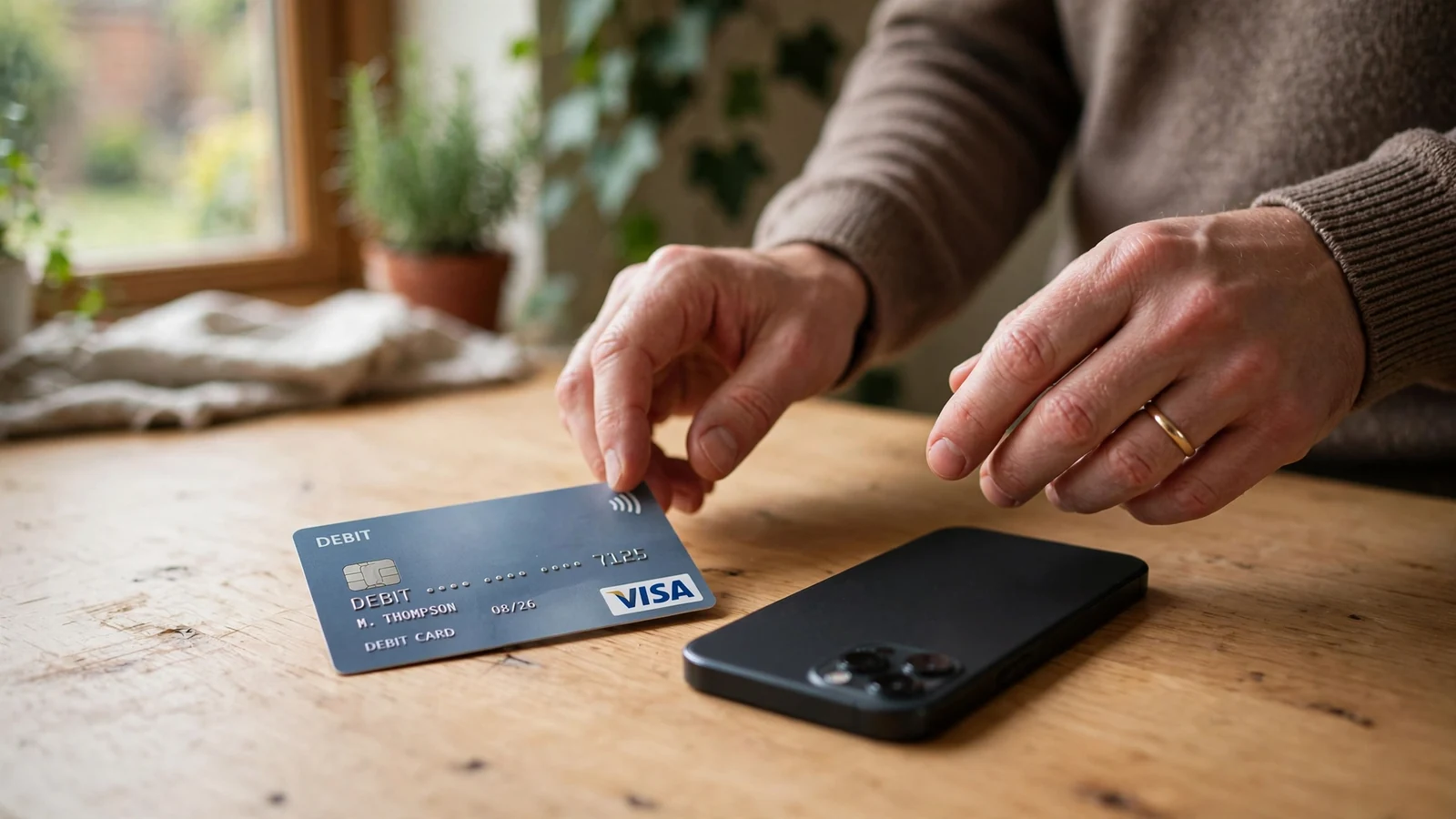
Visa and Mastercard debit cards are accepted at almost all UK casinos and can support low minimum deposits. A card payment sends money from your bank account using the card details; it does not make the transaction a credit-card payment merely because the card brand is the same. Check that the card is a debit card and that the casino’s cashier lists it as an available method.
For a small deposit, a debit card is straightforward when the cashier minimum is no higher than the amount you want to pay. The operator’s stated minimum still governs the transaction: the broad acceptance of Visa and Mastercard does not mean every casino accepts £3 by card. Look at the amount beside the card option rather than assuming that a low minimum advertised elsewhere applies to it.
E-wallets
An e-wallet can provide another route, but the source of its balance matters. For gambling in the UK, it must be funded by debit rather than credit. The casino and wallet provider may each have rules affecting the transaction, so seeing an e-wallet logo in the cashier does not, by itself, establish that every funding source is permitted or that a £3 payment will be accepted.
E-wallet funding
UK gambling regulations require e-wallets to be funded by debit rather than credit.
Seeing an e-wallet logo does not guarantee that every funding source within that wallet is permitted or that a £3 payment will be accepted.
Check the minimum shown for the wallet option and make sure the balance you use comes from an allowed source. If the cashier offers several payment types, compare their displayed conditions instead of treating them as interchangeable. A casino may set the same minimum across its methods, but some operators set a higher threshold for a particular route.
PayPal is one named e-wallet, but its availability and cashier threshold are operator-specific. The general rules for debit-funded e-wallets do not confirm that a particular casino accepts PayPal or allows a £3 deposit through it. Check the casino’s own cashier for those details.
Direct banking
Direct banking moves money from your bank account without using a debit card. It is an eligible deposit route for UK gambling when the payment comes from the account itself. Its practical drawback for a small deposit is that the minimum can be higher than the amount accepted through a card or e-wallet.
Do not infer the direct-banking threshold from the casino’s general minimum deposit statement. Check the amount displayed beside direct banking in the cashier, then compare it with the card and e-wallet options. If the minimum for that route exceeds £3, the casino may still accept a smaller deposit through a different permitted method.
Paysafecard vouchers
Paysafecard works differently from a payment method that sends one exact amount from a bank balance. Vouchers are sold in fixed denominations of £5, £10, £25, £50 and £100. The voucher’s face value does not have to equal the amount of one casino deposit: a single voucher can fund several smaller deposits, subject to the casino’s cashier rules and the voucher balance available.
That distinction matters if you want to make a £3 deposit. A voucher with a higher face value may leave a remaining balance after the first transaction, rather than requiring you to deposit the entire face value at once. Check whether the casino accepts Paysafecard and how it handles partial use before purchasing a voucher. A cashier’s minimum still applies to each deposit, while the voucher balance determines how much remains available for later transactions.
Check the route before confirming
For any method, verify three details in the cashier: that the option is available to you, that its minimum permits the amount you intend to deposit, and that the funds come from a permitted source. A casino’s headline minimum is not enough to establish the limit for every payment route. These checks help distinguish a genuine £3 cashier option from one that applies only to a different method, without confusing a voucher’s purchase value with the amount of an individual deposit.
Using a Small Deposit for Real-Money Play
A £3 deposit can put real money into a casino account, but it does not mean you can later withdraw any amount you choose. The cashier’s deposit rules determine whether the payment is accepted; the withdrawal rules separately determine when a payout can be requested and how much must be in the account first.
Withdrawal Rules
Deposit and withdrawal thresholds are separate rules and do not necessarily match.
The amount shown as your balance is not necessarily the amount available to withdraw. If the deposit has been used for play, only the remaining funds and any eligible winnings are relevant. If a promotional offer has been activated, its terms may also affect when winnings become withdrawable. A deposit made without a bonus avoids that particular layer, but it does not remove the casino’s withdrawal threshold or payment conditions.
A specialist casino review reported that minimum withdrawal thresholds can fall between £1 and £5, while debit cards and some e-wallets may support transactions as small as £1. Those figures describe reported conditions, not a rule that applies to every operator or payment route. A casino could accept a £3 deposit through one method while requiring a higher balance before it processes a withdrawal. Check the cashier’s withdrawal page as well as its deposit page before paying in.
Payment limits can also differ within one account. An operator may accept a small card deposit but set a higher minimum for another method, or restrict the smallest transactions to selected payment options. The displayed cashier minimum therefore tells you only whether that payment can fund the account at that amount; it does not confirm that the same amount can be paid back.
Fees can further separate the amount you send from the amount that reaches your account. A specialist review reported flat transaction charges of £1 to £3 from some payment providers. If a charge applies to a £3 payment, it can materially change its cost. Check both the provider’s terms and the casino’s cashier information, and distinguish a fee deducted from your payment from a casino minimum.
iPad Casinos in the UK: Check Cashier Payments
Before making a small real-money deposit, verify that the account is eligible to deposit, that the chosen method accepts the amount, and that you understand the withdrawal minimum attached to the account. UK gambling deposits must use permitted funding routes, such as a debit card, an e-wallet funded by debit, or a bank account; credit cards cannot be used for gambling. Set a financial limit before depositing. A £3 cashier minimum is a starting condition for putting money in, not a promise that £3 can be withdrawn on demand.
What to Check Before Using a Casino Not on GamStop
“Not on GamStop” describes a relationship with a self-exclusion service; it does not establish that a casino is authorised to offer gambling to people in the UK. A site’s willingness to accept a small deposit, including £3, says nothing about its regulatory status. Treat the deposit amount and the operator’s legal position as separate checks.
For customers in Great Britain, remote gambling operators serving the market must hold the relevant licence from the UK Gambling Commission. Before depositing, look up the operator on the Commission’s public register at gamblingcommission.gov.uk. Check that the registered business matches the company named on the casino site, that its licence covers remote casino gambling, and that the website address you intend to use corresponds to the licensed operator. A similar brand name alone is not enough to establish that you are dealing with the same business.
If an operator is outside the UK regulatory system and does not hold a UK Gambling Commission licence, it is not a UK-licensed casino. Do not treat a “not on GamStop” label, an advertised minimum deposit, or a claim about a different regulator as a substitute for checking the UK position. Online gambling in the UK is legal at sites holding the required local licence; an offshore licence does not make an operator UK-licensed.
Regulatory Status
An offshore licence or a "not on GamStop" label does not make an operator UK-licensed. Always verify the operator on the UK Gambling Commission register.
You must be at least 18 to gamble online in the UK. A lawful operator should verify your age before allowing you to deposit. If the site’s identity, licence entry or verification process does not match what you expect, do not proceed with payment.
Before making a first deposit, set a financial limit you can afford to lose. This is a separate safeguard from checking the licence: one controls how much you choose to risk, while the other helps establish whether the operator is authorised to serve the market. A low cashier minimum should not influence that decision.
PayPal and the £3 Deposit Question
A casino’s general minimum deposit does not, by itself, confirm that PayPal is available or that a £3 payment will be accepted through it. PayPal is an e-wallet, but each operator controls which options appear in its cashier and what minimum applies to each one. You need to check the operator’s current deposit screen and payment terms rather than infer a PayPal threshold from the site’s headline minimum.
At a given UK operator, the minimum is generally shared across payment methods. Some casinos do set a higher minimum for direct banking than for cards or e-wallets, however, so payment-specific rules can matter. That does not establish a separate PayPal minimum: the cashier must show whether PayPal is offered and the amount it will accept.
The practical check is to open the cashier, select PayPal if it is listed, and read the displayed minimum before confirming a transaction. If the cashier does not show PayPal, or its minimum is above £3, the casino’s advertised minimum cannot make a £3 PayPal deposit possible. Do not assume that a payment method available at one casino will also be available at another.
For gambling deposits in the UK, payment must not be made by credit card. Where an e-wallet is used, its funds must be debit-funded; a wallet that allows credit-card funds to be used for gambling is not an acceptable route. These rules concern how the account is funded, while the cashier’s stated minimum determines whether the requested amount can be deposited.
So, a £3 minimum deposit casino in the UK is not automatically a casino that accepts £3 through PayPal. Confirm both PayPal availability and its displayed minimum with the operator before proceeding.
The Cost of a Small Deposit in Pounds
A £3 deposit is not necessarily the full cost of putting money into a casino account. A transaction charge can be added to the payment or taken from the amount sent, depending on how the provider handles fees. In either case, the amount you pay and the balance credited may differ.
A specialist review reports that some payment providers charge flat transaction fees of £1 to £3. That is a reported range, not a charge you should assume applies to every deposit. Check the fee information shown by both the casino and the provider before confirming a payment. A fee may be shown separately at checkout, or it may be described in the provider’s account terms.
Transaction Costs
Some payment providers charge flat fees of £1 to £3, which can significantly impact the final balance credited to your account.
The distinction matters when you are considering a £3 minimum deposit casino. If a charge is added, your total outlay exceeds the deposit amount. If it is taken from the payment, less than the amount you intended to deposit may reach the casino account. A cashier may also reject a payment that does not meet its stated minimum after any relevant deduction, so do not treat the displayed minimum as proof that the full amount will be credited.
Look for the final payment total and the amount the casino says it will receive before authorising the transaction. If either figure is unclear, pause and check the applicable terms rather than making a test deposit: a small payment can still carry a disproportionate fee. The key comparison is not just the deposit figure, but the total cost of the transaction and the resulting account balance.
How to Compare Casinos by Their Minimum Deposit
A stated £3 minimum deposit is a cashier threshold, not a complete description of what you can do with the account. Before comparing casinos, check that the figure applies to the payment method you intend to use and to new accounts, rather than to a particular deposit route or condition.
At a given UK operator, the minimum is generally consistent across payment methods. There are exceptions: some casinos set a higher threshold for direct banking than for cards or e-wallets. Read the cashier terms for the specific method, then compare like with like. A casino advertising a low minimum is not necessarily offering that threshold for every route.
Keep the cashier minimum separate from any promotional qualifying amount. A specialist review reported that a bonus may require a £10 deposit even where the platform accepts deposits of £5. Treat this as a reason to inspect the current promotion terms, not as a rule that applies to every casino. If you deposit below the stated qualifying amount, the payment may reach your balance without activating the offer.
£2 Minimum Deposit Casinos in the UK: What to Check
For a fair comparison, record three details for each operator: the lowest accepted cashier deposit, any payment-specific minimum, and the minimum deposit stated in the promotion terms. Check the terms before paying, since a promotional threshold can differ from the amount needed to fund the account.
Also confirm that the operator holds a current UK Gambling Commission licence. Before your first deposit, set a financial limit and make sure the cashier shows the minimum for your chosen route. This lets you assess a £3 entry point without assuming it guarantees a bonus or applies to every payment method.
Can You Deposit £3 by SMS or Mobile Billing?
Mobile billing can appear alongside very small casino deposit options because the charge is collected through a mobile account rather than entered as a conventional card payment. A specialist review describes the lowest reported deposit tier in UK casinos as £1, with that option rare and associated with particular services such as Boku or Payforit. That describes a low tier, not proof that a named casino accepts a £3 SMS deposit.
Pay by phone casinos in the UK: deposits and limits
Do not assume that an SMS payment will work simply because a cashier lists mobile billing. The operator’s own cashier must confirm whether the method is available to you and what its minimum is. Check the payment screen and terms before sending a message: a displayed deposit option does not establish that every amount can be paid that way.
The funding route also matters. The UK’s credit-card gambling ban took effect in 2020, so gambling deposits must be funded through permitted routes such as debit cards, e-wallets funded by debit cards or bank accounts. A mobile-billed charge should not be treated as an exception to that rule; confirm that the operator accepts it in a manner consistent with its UK regulatory obligations.
Before any deposit, the operator must verify your age, and new customers must be prompted to set a financial limit. You must be at least 18 to gamble. If a £3 option is not explicitly shown for mobile billing, use the cashier’s stated conditions rather than inferring the amount from a lower reported tier.
Which payment methods usually accept £1 deposits?
Debit cards and some e-wallets can support £1 deposits. Some casinos also offer £1 deposits through mobile billing methods such as Boku or Payforit.
Can players claim a bonus with a small deposit?
A small deposit may not qualify for a welcome offer: these commonly require £5 to £10, and some casinos exclude the lowest deposit bracket. Check the qualifying deposit and bonus terms before depositing.
How should players choose a low-deposit casino in the UK?
Check the cashier’s minimum for your chosen payment method, then compare it with the withdrawal minimum, which is often £10 to £20. Also review any transaction fees and the qualifying deposit and conditions for bonuses.
What is the current minimum deposit?
The lowest deposit tier at UK casinos is £1, but it is rare and may be limited to particular payment methods. The minimum can differ by casino and, in some cases, by payment method.