No-account casinos in the UK: what the label means
 Available in GB
The label may describe a faster route into play, but it does not by itself show whether a record exists or how withdrawals are handled.

Table of Contents
- What “No Account” Means at a UK Casino
- Recommended online casinos
- How UK Gambling Oversight Applies to Online Casinos
- What to Check Before Using a No-Account Casino
- How Verification and Withdrawals Fit the No-Account Claim
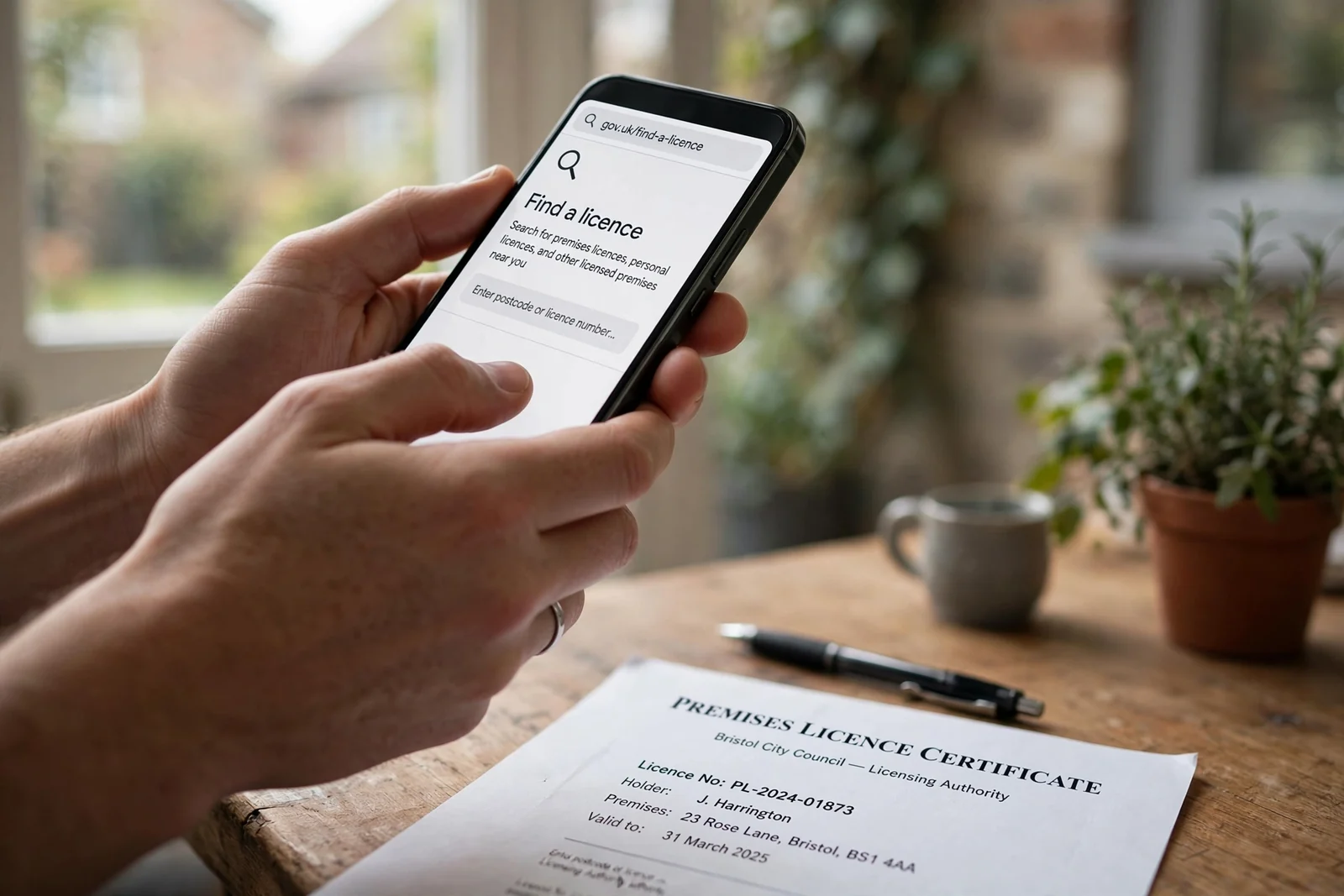
- How to Check a Casino-Site Claim Against the Public Register
- Mobile Deposits, Real-Money Play and Withdrawal Routes
- How No-Deposit Offers and Wagering Terms Work
- Does Playing Without an Account Remove Identity Checks?
- Trustly, No-Account Claims and Cashing Out
- Paysafecard and the Limits of a No-Account Payment Claim
What “No Account” Means at a UK Casino
“No account” describes how a casino presents the route into play; it does not necessarily mean that no player record is created or that you can remain unidentified throughout the customer relationship. The phrase is used for services where you may be able to start without completing the familiar registration form first. What happens behind that initial step depends on the operator’s process.
A conventional registration route asks you to create a profile before playing. A no-account route may reduce or rearrange those opening steps, so the experience can feel more direct. But “no account” is not a precise technical description shared by every operator. It may refer to the way you access play, how details are entered, or how a payment route is used. The label alone does not tell you which of those applies.
It helps to separate three ideas that are often bundled together: starting play, keeping a usable player record, and being able to receive money from the operator. They are related, but they are not interchangeable. A shorter route into play does not establish that the operator has no information associated with you. Nor does it show what information may be needed later if you seek to withdraw.
Non-Gamban Casinos in the UK: What Exclusion Means
For instance, a service may let you begin without setting up a traditional username and password. That describes the opening experience, not necessarily the complete arrangement. Details may be collected in another way, or a record may be linked to the activity through the operator’s systems. Without examining the actual process, you cannot infer from the phrase alone whether a lasting profile exists, what it contains, or how you access it again.
This distinction matters when you see descriptions such as “casinos without an account” or “online casinos with no registration”. Those expressions can sound like a promise that there is no customer relationship to manage. A more careful reading is that the site is advertising a particular way to begin. Whether you can return to the same play history, manage preferences, or access funds later depends on how that operator has built its service.
The wording can also blur the line between registration and verification. Registration is the process of creating or opening a player relationship; verification is the process of establishing that relevant details or payment ownership are acceptable. A route that changes or shortens registration does not, by itself, settle what verification may be needed. Identity or payment-ownership questions can arise before a withdrawal, even if the first interaction was described as account-free.
Casino No ID Verification in the UK: What It Means
That is why “no account” should be read as a claim about an entry route, not as a blanket statement about every later stage. It does not mean that you can assume there will never be a request for information. It also does not guarantee that every function will be available immediately or that the same route will work in the same way for every customer. The useful question is what the operator means by the label in its own explanation of the service.
When comparing no-account casino sites, look at the practical sequence rather than treating the headline as a technical specification. Does the site describe what you do before play begins? Does it explain how you return to the service or retrieve relevant details? Does it say what may happen when you request a withdrawal? These points help reveal whether “no account” means fewer initial steps, a different way of linking activity to a player, or something else.
The same caution applies to phrases such as “instant play” and “no registration”. They may describe an apparent benefit at the start, but they do not define the entire service. Two operators can use similar wording while offering different processes. Conversely, a service may use a different label while still allowing a relatively direct start. The process matters more than the name attached to it.
If you are looking for the best or top no-account casinos, a ranking based only on the phrase would not answer the important question. The label does not tell you how the service handles access after the first visit, or what information could be requested later. Treat it as a starting point for understanding the route, not as proof that a casino has removed accounts, records, or checks altogether.
Attention: A "no account" claim refers to the entry route and does not guarantee that the operator will never request your information or that all functions are available immediately.
In practical terms, “no account” means that the operator is presenting a way to begin or access play without the conventional account-opening experience. It says much less about what happens beyond that point. Keep the initial route separate from the later relationship with the operator, and do not assume that a simplified start rules out questions before you can withdraw.
Recommended online casinos
- NightWinBonus: £900 + 400 free spins · Payout speed: 1-3 business days
- ChanzeBonus: Slots Welcome Bonus #1 200% up to €500 · Payout speed: 1-3 business days
- BritsinoBonus: Welcome Package – Get your £2,200 + 2,000 FS · Payout speed: 1-3 business days
- ZombillionBonus: Welcome Pack 250% up to £4000 + 200 FS · Payout speed: 1-3 business days
- DieselwinBonus: Welcome Pack 250% up to £4000 + 200 FS · Payout speed: 1-3 business days
- EvoSpinBonus: 125% up to €2500 + 125 Free Spins · Payout speed: 1-3 business days
- x3betBonus: Welcome Pack 100% Up to £1.000 + 200 Free Spins · Payout speed: 1-3 business days
- JetsetspinsBonus: 200% Bonus + 100 Free Spins + Free Royal Wheel · Payout speed: 1-3 business days
- BeOnBetBonus: 100% up to €500 + 100 FS · Payout speed: 1-3 business days
- SlotoSportBonus: 500% up to £ 10 200+ 777 FS · Payout speed: 1-3 business days
How UK Gambling Oversight Applies to Online Casinos
The relevant regulator for commercial online gambling in Great Britain is the UK Gambling Commission. Its role is not limited to casinos with premises: it also covers gambling offered remotely, including through websites and other online services. For a player, this means that the key regulatory question is whether the business offering the gambling to consumers in Great Britain holds the relevant Commission licence. The location of the computers or other equipment supporting the service does not, by itself, remove that requirement.
This is why an operator’s location and the market it serves are separate questions. A business may run its online service using equipment outside Great Britain, yet still fall within the Commission’s remote-gambling oversight when it offers gambling to consumers there. The rule follows the service into the market; it does not depend solely on where the operator has placed its technical infrastructure. A description such as “online casino” therefore does not, on its own, tell you whether the operator is within the British licensing framework. The relevant point is whether it is offering the regulated activity to consumers in Great Britain.
Non-UK-Licensed Casinos: Rules and Checks
The Commission is the sole regulator for commercial gambling in Great Britain. That does not mean every gambling-related question across the whole United Kingdom has an identical legal background. The Gambling Act 2005 applies in England, Scotland and Wales, but not Northern Ireland. When a service is described as operating in the UK, it is useful to distinguish that broad label from the specific territorial scope of the rules being discussed. In particular, the Commission’s remote-gambling requirement described here concerns consumers in Great Britain.
What the licensing framework covers
The Commission issues operating licences to businesses and personal licences to individuals who operate within the gambling sector in Great Britain. These are different kinds of authorisation, attached to different roles. An operating licence concerns the business providing gambling; a personal licence concerns an individual involved in operating it. They should not be treated as interchangeable, or as two names for one permission.
For an online casino, the business-level authorisation is central to the question of whether its gambling offer is regulated in Great Britain. The Commission’s framework applies to remote gambling as well as gambling delivered through a physical venue. The fact that a service is reached through a browser or an app changes how the customer accesses it, not the basic question of which regulator oversees the commercial gambling offer.
An operating licence concerns the business providing gambling, whereas a personal licence concerns an individual involved in operating it.
This distinction also helps separate the operator from the website presentation. A site name is the label a customer sees, while the operating licence relates to a business. Establishing which business is responsible for a particular online service is therefore part of understanding the regulatory relationship. A polished site, a familiar payment option or the phrase “no account” does not itself identify the responsible licensed operator.
A no-account route is a way of presenting access to play; it is not a separate category of gambling regulator or a replacement for an operating licence. The same regulatory question applies whether a customer first encounters a conventional sign-up form or a more direct route into play: which business is offering the gambling, and does the relevant licensing framework apply to that offer?
How to read claims about oversight
Words such as “UK”, “British” and “licensed” can be used loosely in site descriptions, but they do not have the same function. “UK” may refer to a broad intended audience; “Great Britain” identifies the territory relevant to the Commission’s remote-gambling requirement described above. “Licensed” is meaningful only when it is clear which business holds what kind of authorisation and which gambling activity that authorisation covers.
The territorial rule also prevents a common misunderstanding: an operator cannot avoid the Commission’s remote-gambling framework merely by placing the equipment used to run its service elsewhere. The location of the technical system and the market receiving the gambling offer are different parts of the arrangement. For consumers in Great Britain, the Commission’s remit follows the remote offer, irrespective of where the key equipment is located.
Non-UK Regulated Casinos: Rules and Risks
This does not turn every online casino claim into proof of regulatory status. A site’s own wording is a statement to assess, not the source of the licence itself. The framework identifies the regulator and the kinds of licences it issues; it does not make a brand name, design feature or payment route equivalent to a licence. Keeping those categories separate makes it easier to understand what regulation applies without confusing the method of access with the legal status of the business.
The practical boundary is therefore straightforward: commercial gambling offered remotely to consumers in Great Britain falls within the UK Gambling Commission’s remit, and the relevant operator must hold the applicable operating licence. The Commission also issues personal licences to individuals operating in the sector. These business and individual permissions form part of the same oversight structure, but each answers a different question about who is authorised and in what capacity.
What to Check Before Using a No-Account Casino
Treat “no account” as a claim about a particular part of the customer journey, not as a complete description of how the casino handles your details. It may refer to a way to begin playing without completing a conventional sign-up form. That wording does not, by itself, tell you what information the operator collects, what conditions apply to your play, or what may be asked of you later.
Check Before Playing
- Identify if the site promises no registration at all or just a simplified start
- Compare the “no account” claim with the official terms and conditions
- Verify how the service identifies your activity when you return to the site
- Confirm the identity of the legal operator behind the brand
- Check the UK Gambling Commission public register for the operator’s licence
Start by identifying exactly what the site promises. Does it say that you can start without creating a username and password, or does it make the broader claim that no registration or checks are needed at any stage? These are different propositions. A statement about getting started should not be read as a promise that you can withdraw without answering questions about your identity or how a payment was made.
Read the claim in context
Look beyond a banner or short description. Follow the route from the claim to the relevant terms and conditions, and check whether those terms describe the same process. If the headline says no account is required but the instructions refer to registering, creating a profile or supplying details before play, the wording needs clarification. The important point is not which label the site uses; it is what steps it asks you to complete.
Check whether the claim applies to the whole service or only to one way of accessing it. A casino may describe an app or payment route as account-free while other ways of using the site follow a different process. Do not assume that an app changes the operator’s requirements. Read the instructions for the route you intend to use, and note whether they explain how your play is associated with you.
A useful test is to ask what happens after you leave the page or close the app. If you return later, how does the service identify your activity? Does it ask you to use an existing login, provide a contact detail or follow another access step? The answer helps distinguish a genuinely simplified entry route from a conventional sign-up process described in abbreviated terms.
Non-GamStop Curaçao Casinos: UK Self-Exclusion Rules
Check who is providing the service
Confirm that the site identifies the operator behind the casino, rather than relying only on a brand name or an app-store description. The company operating the service is the party responsible for the customer journey and its terms. If that information is unclear, you cannot easily tell whose rules apply.
For a casino serving consumers in Great Britain, the remote operator needs the relevant Gambling Commission licence. This is a practical check on the business behind the offer, separate from whether its account-free description is accurate. A polished site or a working app does not establish that the operator holds the required licence. The public register can be used to examine a stated operator, brand or domain; checking a particular entry is a separate step from interpreting the no-account claim.
Be precise about what you are matching. A brand name on a page and a company name in terms may differ, so look for an explanation connecting them. If the operator, brand and web address appear to refer to different businesses without a clear link, do not assume they are interchangeable. That uncertainty matters when you need to understand which terms govern your use of the service.
Look for the conditions that sit behind the route
Before depositing or playing, read the terms that apply to the method you plan to use. Check whether they explain what information may be requested and what happens if the operator cannot confirm details associated with your play or payment. The claim “no account” does not remove the possibility that identity or payment-ownership questions can arise before a withdrawal.
Withdrawal Risks
An absence of a sign-up screen is not proof that no information is being handled, and identity or payment-ownership questions can still arise before a withdrawal is paid out.
Do not treat the absence of a sign-up screen as proof that no information is being handled. Nor does a successful deposit establish that the operator has finished its checks. These are separate events: a route may let you begin, while a later request may be needed to resolve questions before money is paid out. If the terms do not explain how the advertised route works, contact the operator before relying on the claim.
Also check that the information on the page is current and consistent. Promotional copy may be shorter than the terms, and an app description may not reflect the process described on the casino website. Give more weight to the actual instructions and applicable terms than to a broad label. If those materials conflict, ask for an explanation and keep the response with the relevant terms.
A careful assessment therefore has three parts: establish what “no account” means for the specific route, identify the operator responsible for it, and read the conditions that may apply later. That will not predict every check the operator may need to make, but it prevents a limited claim about starting play from being mistaken for a guarantee about the entire service.
How Verification and Withdrawals Fit the No-Account Claim
A no-account route describes how you begin playing; it does not tell you when a casino will finish checking your details. The distinction becomes important when you request a withdrawal. A site may let you start without completing a conventional registration process, yet still need to establish who is requesting the money and whether the payment belongs to that person.
Anjouan Casino Licence in the UK: What It Means
That means the point at which you can access winnings may depend on checks that have not been completed at the start. Identity or payment-ownership questions can arise before a withdrawal. If the operator asks for information at that stage, the request can interrupt the payout process until it has been addressed. “No account needed” should therefore not be read as “no checks before cashing out”.
Follow the payout sequence
Treat a withdrawal as a separate stage from starting a session. First, you submit a request through the site’s available process. The operator may then need to resolve outstanding questions about identity or the source or ownership of the payment. Only after those questions are settled can the request proceed. The exact sequence depends on the operator’s process, so a review’s description of signing in or depositing does not, by itself, explain how a payout is handled.
This distinction helps you read claims precisely. “Play without registering” might refer only to the initial route into the games. It does not establish that the operator will pay winnings without identifying you, or that a withdrawal will be immediate. Nor does the absence of a conventional account form prove that no customer record or later account step will be needed.
Do
- Treat withdrawals as a separate stage from starting a session
- Read the operator’s withdrawal information before playing
- Follow official channels to provide requested verification
Don’t
- Assume “play without registering” means no identity checks for payouts
- Mistake a submitted withdrawal request for a completed payment
- Rely on broad phrases like “instant cashout” without checking conditions
What a review can and cannot tell you
A no-account casino review is useful only if it separates the entry process from the withdrawal process. Look for an explanation of what happens after you request your money: whether the site describes identity checks, what information it may ask you to provide, and how it tells you that a request is being held for review. A statement that deposits or play can begin without registration is not an answer to those payout questions.
Be cautious with broad wording such as “instant cashout” or “no verification”. Without a clear description of the conditions, those phrases do not tell you whether a check can arise later. A review may summarise an operator’s claims, but it cannot remove the operator’s ability to ask questions relevant to a withdrawal. The practical detail is the point at which the check occurs and what you must do if it does.
Before requesting a withdrawal
Read the operator’s withdrawal information before you start playing, rather than relying on the wording used to promote the entry route. Check whether the process explains what happens if identity or payment ownership needs to be confirmed. If that information is unclear, you cannot safely infer that a no-account casino will release winnings without further steps.
Keep the stages separate in your expectations: access to play is not approval of a payout, and a submitted withdrawal request is not the same as completed payment. If a check is raised, follow the operator’s stated process and provide only the information requested through its official channels. The no-account claim concerns how play begins; it does not settle what must be resolved before winnings can be accessed.
Curacao Casino Licence in the UK: What It Means
How to Check a Casino-Site Claim Against the Public Register
A casino’s trading name, website address and legal operator may not be identical. To check a claim, start with the exact brand and domain shown on the site, then compare those details with the UK Gambling Commission’s public register. If the register identifies a different legal business, check whether the stated brand or domain is connected to that entry before treating it as a match.
Search the register using the operator’s name as well as the casino brand. A brand name alone may not make the responsible business obvious, while a legal company name may not resemble the name used on the site. Check the domain too: a record for one web address does not automatically confirm a different address. Keep the spelling exact, including the ending of the domain, so that a near match is not mistaken for the same site.
A result should be assessed as a set of identifiers, not as a familiar name in isolation. Compare the register entry with the site’s own operator and contact details. If those details do not line up, do not assume that a similarly named business is responsible for the casino. The same applies to claims about a group of related brands: a list of no-account casino sites, or a claim that two casinos are sister sites, needs a verifiable connection between each brand and the relevant operator. Similar names or shared marketing language are not enough to establish that connection.
Verify a Casino
Search the Register
Use the UK Gambling Commission public register to search for the exact legal company name, brand, and domain.
Match Identifiers
Compare the register entry’s details with the site’s own operator and contact information to ensure they line up.
Verify the Domain
Check that the specific web address matches the register, as a record for one domain does not automatically confirm another.
One reported example illustrates why the domain matters. A specialist review reports that the UK Gambling Commission public register dated 26 September 2026 did not identify a LuckyPays entry under that brand or its stated domain, luckypays.io. That is a finding about the register at that date and those identifiers; it should not be stretched into a claim about other brands or domains. If a site changes its branding or address, check the new details rather than carrying an earlier result across.
If you cannot match a site’s stated brand or domain to a register entry, treat the claimed connection as unconfirmed. Do not rely on a promotional page, a third-party list or a statement that several casinos belong to the same group as a substitute for checking the register. Record the exact wording and address you checked, then compare them with the entry rather than relying on memory. A no-account casino bonus or other offer does not establish who operates the site, and a list assembled by another party does not by itself verify its members.
The register is a way to test specific identifiers, not a directory that confirms every claim made about a casino. Recheck the details when the brand, domain or stated operator differs, and avoid treating a partial name match as proof. If the relevant details are absent or inconsistent, you have not confirmed that the register entry belongs to the site you intended to check.
Mobile Deposits, Real-Money Play and Withdrawal Routes
On a mobile casino, the screen you use does not determine how money moves. A deposit made through pay by mobile is charged through your mobile service, but that route is for funding play only: winnings cannot be sent back to your phone bill. You need to know the available withdrawal route before depositing, because the deposit method may not be available for withdrawals.
For a UKGC-licensed casino, withdrawals must be processed through an alternative method, such as a bank transfer, debit card or regulated e-wallet. That means the payment flow has two separate stages: money goes from your mobile account towards the casino, while a payout travels through a different channel. Treating a mobile deposit as proof that the same route can cash out winnings confuses those stages.
The limits on mobile billing also affect how you can fund play. A specialist review reports a monthly ceiling of £240 for carrier billing. It also reports a £30 limit for a single Boku deposit. These figures are claims from that review, not a guarantee that every operator or mobile provider applies the same limits. Check the payment screen and the relevant terms for the route actually offered to you; a limit may apply to the payment method rather than to your casino balance.
A no-account casino claim does not change this payment structure. If a mobile deposit is accepted, it still does not make the phone bill a withdrawal channel. Before paying, identify which withdrawal methods the casino supports and whether one is available to you. A route listed for deposits alone cannot answer that question.
For UKGC-licensed casinos, mobile deposits via carrier billing are for funding play only; winnings must be processed through alternative methods like bank transfers or e-wallets.
This distinction matters when you are comparing a mobile option with a bank or e-wallet payment. The mobile route may put the deposit on a phone bill, while the withdrawal has to use a separate method. If you have not checked that method in advance, you may be able to fund play without having established how a later payout would reach you. The practical check is therefore not just whether the casino accepts deposits on mobile, but whether its stated payout routes suit your circumstances.
How No-Deposit Offers and Wagering Terms Work
A no-deposit offer gives you a promotional benefit without requiring an initial deposit. It may take the form of free spins on specified slots or a credit bonus. A specialist review describes no-deposit spin offers as often featuring 10–30 spins, and credit bonuses as commonly falling between £2 and £10, with wagering requirements of 30–60 times the bonus. Treat these as reported examples, not a promise of what a casino currently offers.
Wagering requirements set how much qualifying play must take place before bonus-related winnings can be withdrawn. The amount that counts may depend on the promotion’s rules and which games are eligible. A specialist review also reports a cap of 10 times the bonus funds for Great Britain-facing incentives under rules effective from 19 January 2026. Because that is a time-sensitive regulatory claim, check the current official rules and the operator’s live terms rather than relying on a general figure or an old promotion.
The product-type rule is separate: a single incentive cannot combine more than one gambling product type. The offer should therefore make clear which product it applies to, as well as which games qualify and how they count towards any wagering requirement.
Do not assume that an offer remains available because it appears in a comparison page, an advert or an old review. Treat a no-deposit bonus as current only when it appears in the casino’s live official promotion terms. Read those terms before accepting it, including the expiry date, eligible games, wagering conditions, maximum win and withdrawal conditions. The maximum win cap and wagering terms must be visible within one click of the offer.
This matters even when the headline offer sounds simple. Free spins may be limited to nominated slots; a credit bonus may have different play and withdrawal conditions. If the terms do not let you determine what counts, when the offer expires and what happens to winnings, you cannot reliably assess its value.
Does Playing Without an Account Remove Identity Checks?
Playing without creating a conventional account can change how you begin, but it does not establish that you will never be asked to confirm who you are. The phrase describes an access route, not a promise that identity checks are absent throughout play.
A casino may let you start through a route that uses details or payment information already available to it. That does not settle what the operator may need to establish later. Identity or payment-ownership questions can arise before you withdraw, so an initial deposit or period of play is not proof that every later request has been cleared.
No-Account Reality
"No account" describes the access route into play, not an exemption from identity or payment-ownership checks during the customer relationship.
Keep the distinction clear: “no account” may describe what you do at the start; it does not necessarily describe the operator’s checks. If you are asked for information, the request may relate to confirming your identity or that the payment method belongs to you. The timing can matter: you may encounter the question when you want to access winnings rather than when you first begin playing.
Before using this type of route, read the operator’s terms and any information about verification. Check what may be requested and when, and make sure you can provide the relevant details if needed. Do not treat a quick entry process as evidence that withdrawals will be automatic or that checks cannot occur.
The practical answer is therefore limited: you may be able to start without setting up a standard account, but that alone does not remove the possibility of identity or payment-ownership checks later.
Trustly, No-Account Claims and Cashing Out
A casino may describe a payment route as part of a no-account option, but that does not establish how winnings can be paid out. Funding play and receiving a withdrawal are separate steps: the method shown for a deposit may not be available for withdrawals, and the operator may offer a different route for cashing out.
This distinction matters when you see Trustly mentioned alongside a no-account claim. The name alone does not tell you whether it applies to deposits, withdrawals, or both. Nor does it show that you can receive winnings through the same route used to start playing. Check the casino’s own payment information for the methods it accepts at each stage, rather than treating a payment label as a complete description of the transaction.
For a UKGC-licensed casino, withdrawals must be processed through an alternative method, such as a bank transfer, debit card or regulated e-wallet. The available options depend on what the operator provides. Before depositing, identify the withdrawal route and any conditions attached to it; otherwise, you may find that the method you used to fund play cannot be used to cash out.
A no-account presentation therefore describes neither the full payment flow nor a promise of a particular payout method. Assess the deposit route and withdrawal route separately. If the site’s wording leaves the distinction unclear, seek clarification from the operator before you send funds.
Paysafecard and the Limits of a No-Account Payment Claim
Seeing Paysafecard named as a deposit option does not establish that you can play without an account, or that the operator will never ask questions about identity or payment ownership. The payment method and the casino’s checks are separate parts of the process: one concerns how funds reach play; the other concerns who is using the service and whether a payment can be linked to that person.
A no-account claim may describe a route that avoids a conventional sign-up at the start. It does not, by itself, explain what information the operator may request later. If you try to withdraw, identity or payment-ownership questions can arise before the money is released. The presence of Paysafecard in a payment list does not settle what evidence may be requested or whether that method is relevant to a later check.
Read the operator’s wording closely. Does “no account” refer only to the initial deposit and play route, or does the site explain how it handles a withdrawal? Look for the applicable terms and any stated verification requirements rather than treating a payment logo as proof that checks are waived. If the wording does not make the distinction clear, ask the operator before depositing.
This distinction matters because a payment option describes a transaction route, not the whole relationship between you and the casino. You should not infer from Paysafecard’s mention that the operator has confirmed anonymous play, guaranteed access to winnings, or exemption from identity checks. Treat those as separate claims and assess each on the operator’s own stated terms.